Cavity Wall Insulation in Ireland
How cavity wall insulation works, what it costs in 2026 and how to claim the SEAI grant of up to €1,700.
Cavity wall insulation: a half-day job that pays back within three years
Around 35 percent of heat loss in an uninsulated Irish home escapes through the walls. For homes with an unfilled cavity, filling it is the quickest wall upgrade available with no external works and a grant that often covers the full cost.
Most Irish homes built between the 1920s and 1990s have cavity walls: an outer leaf of brick or block, an air gap, and an inner leaf. That gap is a thermal weak point. Filling it with bonded bead, mineral wool or foam reduces wall heat loss by up to 60 percent.
What happens during a cavity wall insulation job
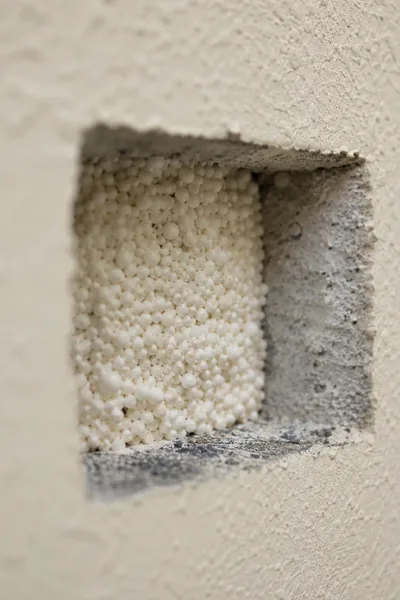
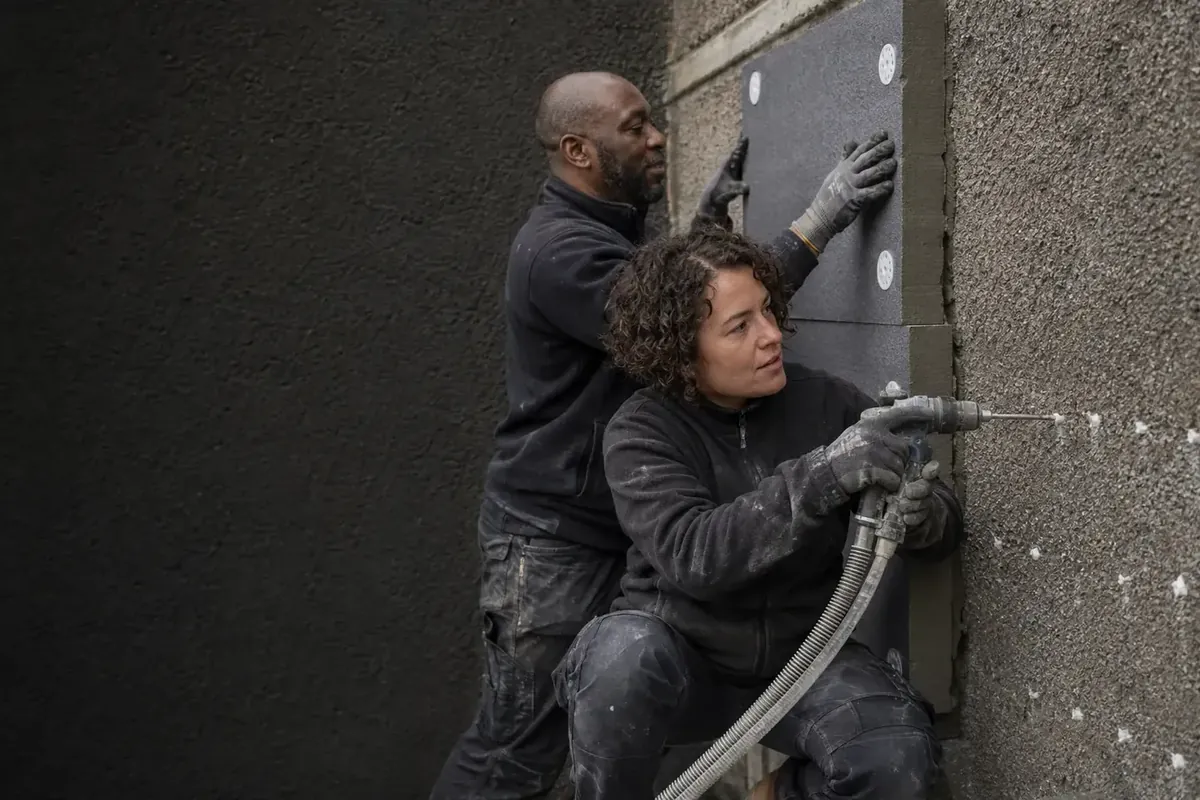
The contractor drills a grid of small holes (around 22mm) across the outer face of the wall at intervals of roughly 1 metre. A nozzle is inserted and insulation material is blown or injected until the cavity is fully filled. The holes are then plugged and pointed to match the existing finish.
The three materials approved under the SEAI scheme are EPS bonded bead (the most common), mineral wool fibre and polyurethane foam. Bonded bead is the standard choice: the beads are coated in adhesive so they bond together, eliminating slumping and moisture movement over time.
- Small drill holes from outside, typically 22mm diameter
- Insulation blown or injected under pressure to fill the full cavity
- Holes re-plugged and pointed to match existing finish
- No internal disruption and no need to vacate during works
- Cavity depth verified by probe before work begins
How much does cavity wall insulation cost in Ireland?
Prices below are indicative 2026 figures. The SEAI grant is deducted directly from your invoice so you pay only the net amount.
Prices vary by contractor and location. Get at least two quotes from SEAI-registered contractors.
SEAI grant: up to €1,700 in 2026
The Better Energy Homes scheme pays a grant directly to SEAI-approved contractors, who deduct it from your invoice. You pay only the net cost on completion.
- Cavity wall insulation: up to €1,700 per dwelling
- Your home must have been built and occupied before 2011
- Work must be carried out by an SEAI-registered contractor
- Grant is applied as a direct deduction from your invoice
- Can be combined with attic and floor insulation grants
Find an SEAI-approved cavity wall contractor
All contractors in our directory are SEAI-registered. Browse by county, enquire directly, no middleman.
Does your home have a cavity wall?
Most Irish homes built between the 1920s and 1990s have unfilled cavity walls. Homes built before this period typically have solid walls and are not suitable for cavity fill. Homes built after about 1995 may already have cavity insulation installed.
A contractor can confirm suitability by probing the wall with a small drill hole before any work begins. They will also check for defects such as failing wall ties, existing partial fill, or moisture issues that might affect the work.
- Home built and occupied before 2011 (for SEAI grant)
- Cavity walls present, typically 50mm or wider
- No major moisture defects or failing wall ties
- External render or brickwork in reasonable condition
What to expect during installation
Cavity wall insulation is the least disruptive wall upgrade available. All work takes place from outside. The contractor will set up scaffold or ladders where needed, drill the injection holes, fill the cavity and re-point the holes.
A standard semi-detached home is typically complete in two to four hours. You do not need to vacate the property. The finished drill holes are barely visible in brickwork and invisible under render.
- All work from outside, no internal disruption
- Two to four hours for a semi-detached home
- Holes re-plugged in a matching finish
- Post-works guarantee and SEAI certificate issued
How much will you save on heating bills?
Walls account for up to 35 percent of heat loss in an uninsulated Irish home. Filling a previously empty cavity reduces wall heat loss by up to 60 percent, and typically cuts overall heating bills by 15 to 25 percent depending on home type and heating system.
For a 3-bed semi-detached home in Ireland, that translates to an annual saving of €150 to €250 on heating bills. With the SEAI grant covering most or all of the install cost, the payback period is often under two years. If you are also upgrading your heating system or installing a heat pump, you will need a RECI-registered electrician for that part of the work.
See full 2026 cost guideFrequently asked questions
How do I know if my walls are cavity walls?
Most Irish homes built between the 1920s and 1990s have cavity walls. A contractor can confirm by drilling a small test hole and inserting a probe to measure the cavity depth. Homes with English bond brickwork (alternating header and stretcher courses) are typically solid-walled.
What material is used to fill the cavity?
The most common material is EPS bonded bead, small polystyrene beads coated in adhesive that bond together inside the cavity. Mineral wool fibre and polyurethane foam are also used. Your contractor will recommend the best material for your cavity width and wall condition.
Can cavity wall insulation cause damp?
Correctly installed cavity wall insulation does not cause damp. However, if the outer leaf has existing cracks, defective pointing or damaged render, moisture can bridge into the cavity. A pre-survey identifies these issues before any insulation is installed.
Will the drill holes be visible afterwards?
On rendered walls the holes are invisible once re-pointed. On exposed brick they leave small plugs that are close to invisible but may be faintly visible on close inspection. Most homeowners find the finish entirely acceptable.
Can I combine cavity wall insulation with other grants?
Yes. SEAI Better Energy Homes grants can be stacked. Cavity wall, attic and floor insulation grants can all be claimed at the same time, giving a combined maximum of several thousand euro depending on your home.
My cavity has existing partial fill. Can it be topped up?
Sometimes, yes. A contractor can probe the cavity to identify voids and inject additional material into unfilled sections. Whether this is practical depends on the original fill material and the condition of what is already there.
Find cavity wall insulation contractors by county
All contractors are SEAI-registered under the Better Energy Homes scheme.
Browse SEAI-approved contractors near you
Free directory across all 26 counties. Contact approved cavity wall insulation installers directly, no middleman, no fee.
Free to use. No sign-up required.
Find a wall insulation contractor near you
Browse SEAI-registered installers across all 26 counties. Get free quotes and check your grant eligibility before you call.