External Wall Insulation in Ireland
How EWI works, what it costs in 2026 and how to claim the SEAI grant of up to €8,000.
EWI: the highest-performing retrofit for Irish solid-wall homes
External wall insulation wraps the outside of your home in a continuous layer of rigid insulation board topped with a new render finish. It is the most effective single retrofit available for older Irish homes, particularly those with solid walls where cavity fill is not an option.
Homes built before the 1920s, or those with poured concrete or solid block construction, cannot have cavity fill. EWI is the recommended solution for these properties, and with the SEAI grant of up to €8,000 it is now more accessible than ever.
What happens during an EWI installation
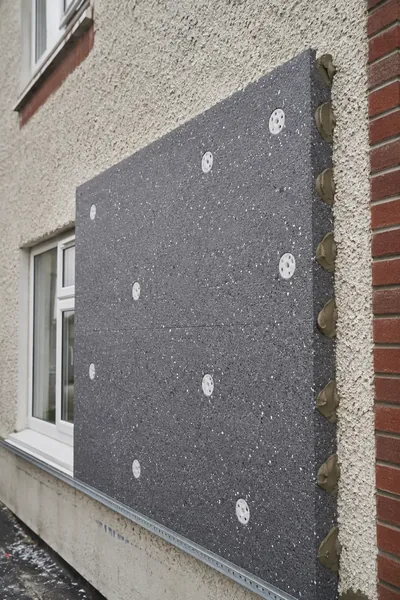
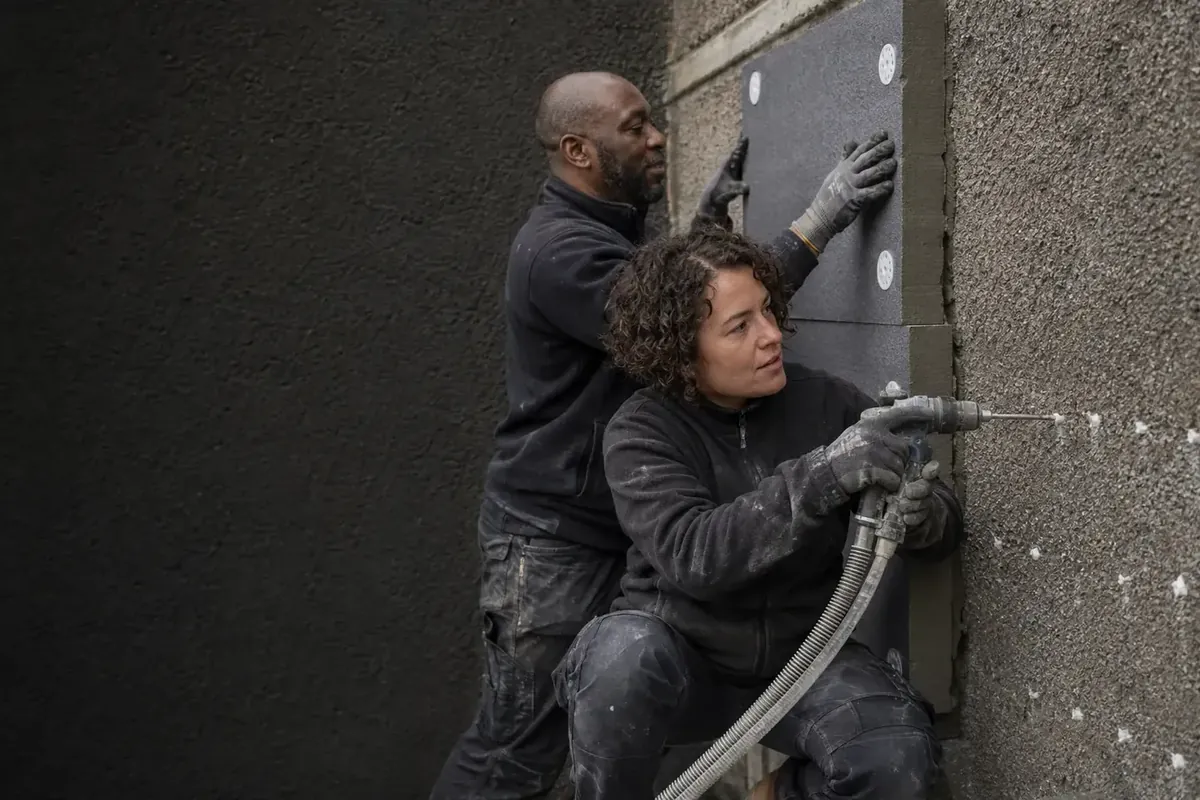
Insulation boards (typically EPS, mineral wool or phenolic foam) are mechanically fixed and adhesive-bonded to the outer face of the wall. A fibreglass reinforcement mesh is embedded in a base coat, and a final decorative render or silicone finish is applied over the top.
The finished result is a new external skin on the building, typically 80mm to 120mm thicker than the original wall. The new render also renews the weatherproofing of the property, which can reduce maintenance costs on older homes with tired render.
- Insulation boards fixed to outer wall face with adhesive and mechanical anchors
- Fibreglass mesh embedded in base coat for crack resistance
- Decorative silicone or mineral render finish applied last
- Window sills, reveals and soffit details extended to suit new wall thickness
- No loss of internal room size and no disruption to rooms during works
How much does external wall insulation cost in Ireland?
EWI is the largest investment of any wall insulation upgrade, but the SEAI grant significantly reduces the net cost. Prices below are indicative 2026 figures.
EWI costs depend heavily on property size, existing render condition and the finish type chosen. Get at least two quotes from SEAI-registered contractors.
SEAI grant: up to €8,000 in 2026
The Better Energy Homes scheme pays the highest grant for external wall insulation, reflecting its cost and impact. The grant is deducted directly from your invoice by your SEAI-registered contractor.
- External wall insulation: up to €8,000 per dwelling
- Your home must have been built and occupied before 2011
- Work must be carried out by an SEAI-registered contractor
- Grant is applied as a direct deduction from your invoice
- Can be combined with attic, floor and heating system grants
Find an SEAI-approved EWI contractor
All contractors in our directory are SEAI-registered. Browse by county, enquire directly, no middleman.
Is your home suitable for EWI?
EWI is suitable for almost all home types, including solid-wall, cavity-wall and hollow-block construction. It is particularly recommended for homes with solid walls where cavity fill cannot be applied.
Planning permission is generally not required for external wall insulation with a standard render finish, but it is worth checking with your local authority if your home is a protected structure or in a conservation area. Your contractor will advise as part of the pre-works survey.
- Suitable for solid-wall, cavity and hollow-block homes
- Planning permission generally not required
- Existing external render checked and prepared before works
- Home built and occupied before 2011 to claim SEAI grant
Living through an EWI installation
All work takes place outside. You do not need to vacate the property during the works, and internal rooms are not disrupted. Scaffolding is erected around the building for the duration.
A standard semi-detached home typically takes one to two weeks from scaffolding erection to final render. Access to windows and doors is maintained at all times. The finished result is a completely renewed external appearance as well as a warmer, more energy-efficient home.
- All works external, no internal disruption
- One to two weeks for a semi-detached home
- Scaffolding erected and removed by the contractor
- New weatherproof render finish on completion
How much will you save with external wall insulation?
EWI is the highest-performing single retrofit for the external envelope of a home. By wrapping the building in a continuous insulation layer with no cold bridges, it eliminates the thermal weak points that account for the majority of wall heat loss in solid-wall properties.
For a solid-wall 3-bed semi-detached home in Ireland, EWI can reduce heating bills by 30 to 40 percent. Combined with a heat pump, the result is often a BER improvement of two to three grades, substantially increasing property value and comfort. Heat pump installation requires a RECI-registered electrician — find one at electriciansinireland.ie.
See full 2026 cost guideFrequently asked questions
What insulation board is used for EWI?
The most common materials are expanded polystyrene (EPS), mineral wool and phenolic foam. EPS is the most widely used in Ireland due to its cost and ease of installation. Mineral wool is used where a higher fire rating is required. Phenolic foam offers the best thermal performance per millimetre of thickness.
Do I need planning permission for EWI?
In most cases, no. EWI with a standard render finish is exempt from planning permission under the Planning and Development Regulations. Exceptions apply for protected structures and certain conservation areas. Your contractor will confirm before work begins.
Will EWI change how my house looks?
Yes, the external render finish will be renewed. You can choose from a range of textures and colours. Exposed brick homes will be rendered unless specific brick-effect systems are specified. Most homeowners view the renewed appearance as an improvement.
Can EWI be applied over existing render?
Sometimes, if the existing render is sound and well-bonded. A pull-off test determines whether over-boarding is appropriate. Loose or friable render is typically removed before EWI installation to ensure a solid bonded substrate.
How thick will the walls become?
EWI typically adds 80mm to 120mm to the external face of the wall, including board and render. Window reveals, sills and door surrounds are extended as part of the works. Internal room size is not affected.
How does EWI compare with cavity fill or dry-lining?
EWI outperforms cavity fill on solid-wall homes where cavity fill is not applicable. Compared with dry-lining, EWI does not reduce internal room size and delivers better thermal bridging performance. It is more expensive but delivers the highest performance of any wall insulation option.
Find EWI contractors by county
All contractors are SEAI-registered under the Better Energy Homes scheme.
Browse SEAI-approved EWI contractors near you
Free directory across all 26 counties. Contact approved external wall insulation installers directly, no middleman, no fee.
Free to use. No sign-up required.
Find a wall insulation contractor near you
Browse SEAI-registered installers across all 26 counties. Get free quotes and check your grant eligibility before you call.